The New Frontier of Trust
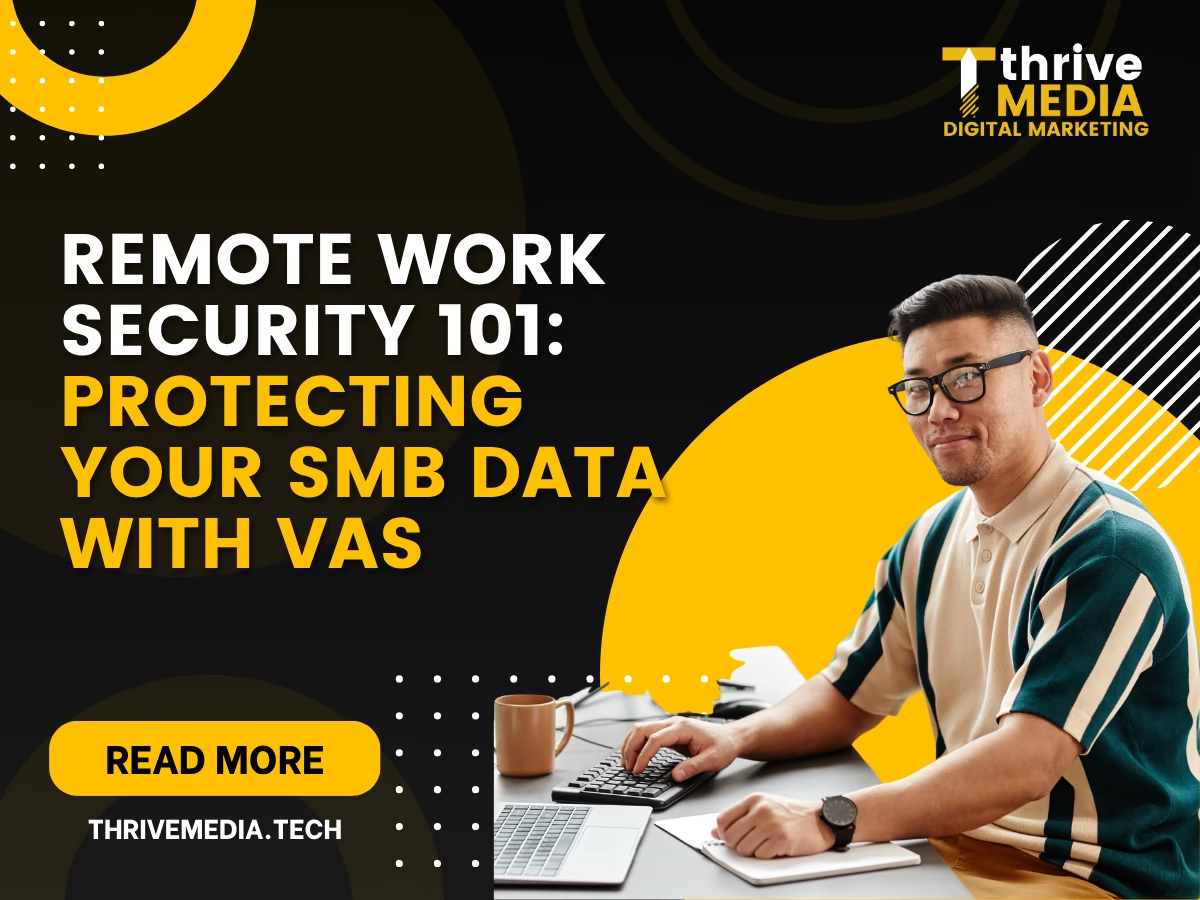
You started your business to solve problems, not to become a full-time cybersecurity analyst. Yet, with the fundamental shift to remote work, every small to medium-sized business (SMB) owner has inherited a new, critical responsibility: defending a digital perimeter that no longer has walls.
The comfortable fortress of the traditional office network, guarded by a single firewall, is gone. Today, your perimeter is wherever your team is, including the essential remote assistants who drive your daily operations.This is the new reality. Scaling your capacity with capable remote professionals is non-negotiable for growth, but it introduces the villain of the story: data vulnerability.
For the ambitious SMB owner, the challenge isn’t just hiring the help needed; it’s making sure that help is a security asset, not an accidental liability. Your mission is to scale with speed and confidence. Our role is to show you the playbook for protecting your critical data while taking advantage of remote support.
This is not about installing another piece of software. It’s about building a comprehensive, human, and systemic shield for your business data, specifically engineered for a modern, decentralized workforce.
Section 1: The Myth of the Isolated Risk
A common misstep for SMBs is treating remote workers, including dedicated virtual assistants (VAs), as isolated nodes of risk. The cold reality is that they are deeply integrated parts of your operation, handling everything from customer financials (accounting and bookkeeping) to proprietary marketing strategies (digital marketing campaigns).
When a talented professional joins your team remotely to take on administrative tasks or manage your full service digital business package, they become a trusted custodian of your intellectual property. The threat landscape is not merely external hackers; it is also the simple, everyday errors: using weak passwords, clicking a well-crafted phishing email, or transferring files over an unsecure network. These actions can introduce significant, potentially business-ending risk.
Scaling your business requires putting processes in capable hands, but those hands must be trained, supported, and governed by solid security protocols. The true risk isn’t the geographical distance; it’s the process distance.
The Problem Defined: Why Your Current Strategy Fails
- Fragmented Access: Every new SaaS tool, every shared document, and every personal device used for work is a potential security hole.
- The Overwhelmed Hero: The SMB owner (you) is too busy focusing on growth and revenue to manage MFA rollouts and shadow IT inventory.
- Inconsistent Training: Security training, if it happens at all, is often a one-off event, not an ongoing, living part of the culture.
This gap is where a strategic, managed remote workforce turns from a necessity into a security superpower. You aren’t just hiring a single person; you are securing a reliable, process-driven virtual assistant team designed for seamless, worry-free support.
Section 2: Building the Digital Fortress with Virtual Assistants
The solution is a layered defense model, where the virtual assistant is not just an operator, but a component of your security infrastructure. This approach allows you to confidently hand over operations and focus on your bigger vision. We organize this around three primary pillars that ensure data integrity and compliance, turning your remote team into your strongest defense.
Pillar 1: Architecting the Fortress of Policy (The Process)
Security does not start with a tool; it starts with a document. Clear, comprehensive policies eliminate guesswork and standardize behavior, regardless of time zone or physical location. For businesses leveraging remote staff, this documentation is essential.
Core Policy Requirements:
- Acceptable Use Policy (AUP) Vetting: A specific AUP that details which devices can be used (only company-approved devices or clear separation on personal ones), which Wi-Fi networks are forbidden (public hotspots), and the protocol for handling sensitive data. When working with remote teams, policies must explicitly cover data residency and transfer protocols.
- Strict Access Control: Implement the principle of Least Privilege. VAs and all remote staff should only have access to the specific files, applications, and folders absolutely necessary to complete their job function. An accounting VA does not need access to the social media ad account’s billing details unless they are part of their scope. This discipline significantly limits potential damage from a compromised account.
- Incident Response Protocol: What happens when an anomaly is detected? Every team member, especially remote staff, must know the immediate steps for reporting a suspected breach, a lost device, or unusual account activity. This instant notification process is a key differentiator between a minor scare and a major catastrophe.
Pillar 2: Equipping the Defenders (The Tooling and Tech Stack)
Security tools should be non-negotiable operating expenses, not optional add-ons. They standardize protection and enforce policy automatically.
- Mandatory Multi-Factor Authentication (MFA): This is the cheapest, most effective security upgrade available. Every single account from email, CRM, project management, cloud storage, must require MFA. If a login attempt is made from a new location, the user must verify their identity. This small step renders 99% of password-related attacks useless.
- Centralized Password Management: Eliminate the chaos of “passwords on sticky notes” or reused company credentials. Implementing a shared, secure password vault (like 1Password or LastPass) ensures complex, unique credentials for every service and simplifies offboarding when a VA’s assignment concludes. Access is revoked instantly and system-wide.
- Secure Connection and File Sharing: Use encrypted channels. For accessing sensitive internal resources, a Virtual Private Network (VPN) may be required. Cloud storage (Google Drive, Dropbox, SharePoint) must have access logs enabled and files shared through secure links with expiration dates, rather than attachments. This is crucial for maintaining control over files handled by remote teams.
Section 3: The Human Firewall and Peace of Mind
The most sophisticated technology is useless if the human managing it is untrained. This is the thought leadership component: recognizing that the best security is achieved through culture and continuous learning, not just technology.
Pillar 3: Cultivating the Culture of Security (The Training)
The human element is your ultimate firewall. Remote professionals, especially those engaged in ongoing partnerships, must be viewed as collaborators in data defense.
- Continuous Education: Security training should not be a yearly checkbox. It must be ongoing, with monthly updates on current phishing trends, ransomware tactics, and social engineering attempts. The training should be practical and scenario-based. For example, regularly run simulated phishing campaigns to keep the team vigilant.
- Focus on Phishing and Social Engineering: These tactics target remote workers because they rely on human trust and distraction. Training must emphasize critical thinking: pausing before clicking, verifying requests for sensitive information over a second channel (like a quick phone call), and being suspicious of urgency.
- The Vetting Advantage: This is where a strategic provider, like Thrive Media Tech, becomes your guide. When you engage a managed remote team, you bypass the solo hiring risk. These teams are typically pre-vetted, trained from day one in security protocols, and managed by a dedicated project manager who oversees compliance and consistency. This managed approach adds another layer of security that individual hires simply cannot match.
Beyond the Checklist: Strategic Scaling
Once these three pillars are established, you achieve something far more valuable than mere compliance: strategic operational peace of mind.
When you know your dedicated team of remote professionals is operating within a secured framework, one where access is limited, credentials are never recycled, and security breaches are reported instantly, you stop managing risk and start managing growth.
This is the distinction between simply delegating a task and securely scaling your capacity.
- Focus Redirection: You reclaim the time spent worrying about a VA’s home network and reallocate it to high-level strategy and client acquisition.
- Compliance Confidence: Businesses handling sensitive data (healthcare, finance) gain confidence knowing their operational support meets stringent data privacy standards. This elevates your standing with partners and clients.
- Built-in Resilience: The VA team model naturally adds resilience. If one support professional is unavailable, the project manager and production VA ensure continuity, and critically, security protocols remain locked down because the process, not the individual, governs the access.
Securing your remote workforce is securing your future. It’s not about fearing the shift to decentralized work; it’s about embracing it with a system designed for a new era. Put your business in capable hands, and make sure those hands are also securely managed.